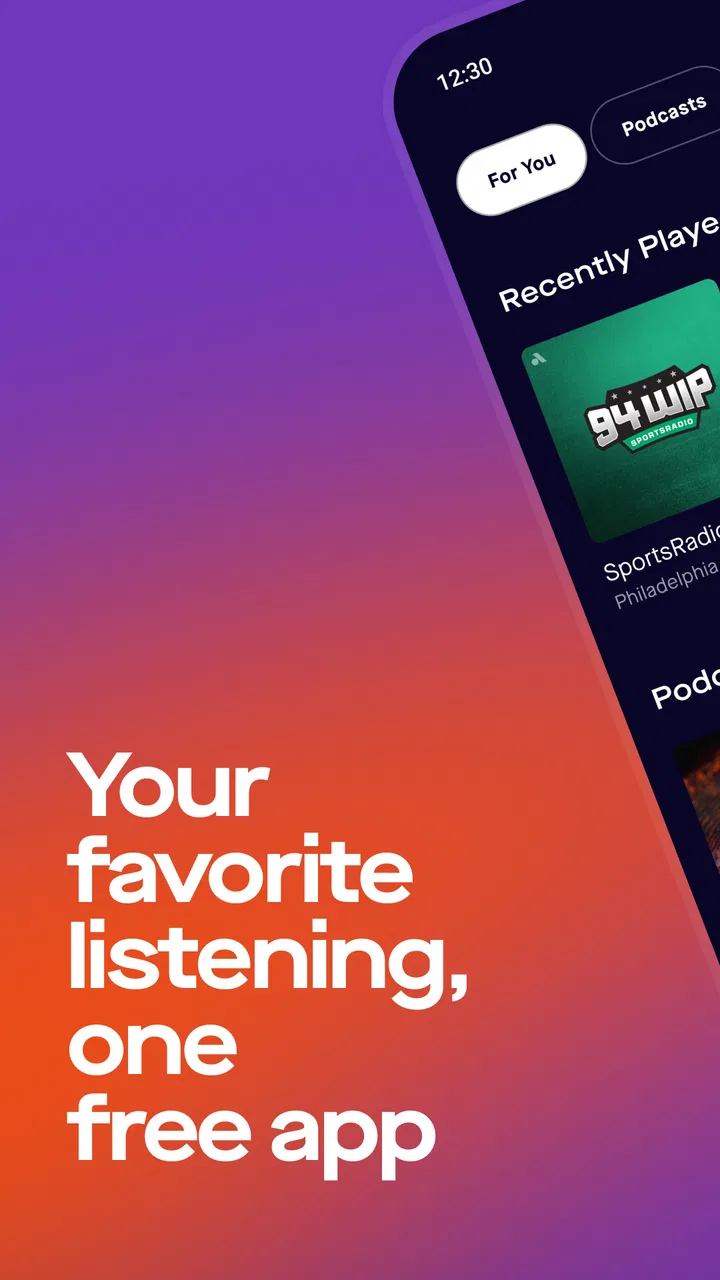
Audacy: Radio & Sports Talk
- 3.1
- Rating
- 5.00M
- Installs
- Free
- Price

 Analysis by App-foxy
I keep coming back to Audacy: Radio & Sports Talk for one simple reason: it puts live radio and talk programming in the same place as podcasts, news, music, and sports coverage. That sounds broad, but the real value is more focused than the store wording suggests. The app is most useful when I want to follow a familiar station or live sports conversation without being tied to a traditional radio, while still having on-demand audio nearby when my attention changes.
Developed by Audacy, Inc., this free Music & Audio app feels aimed at listeners who move between live broadcasting and spoken content rather than people looking for a highly personalized music-streaming replacement. I used it with that expectation, and the experience made more sense once I stopped treating it like a direct rival to a giant music catalog. Its strength is the connection to radio-style listening: stations, talk, local-feeling programming, news, and sports are the center of gravity.
The app has been available since January 12, 2011, and its current version is 2026.06.01. It supports Android 7.0 and later, which makes it accessible on many older devices. It is rated for Teen audiences. With more than five million installs, it is clearly established, although its average rating of 3.1 from roughly forty-five thousand ratings suggests that the experience is not equally smooth for everyone.
You May Also Like

 Blood Strike: 2.5 Anniversary
Blood Strike’s Loadouts Turn Every Drop Into a Tactical Gamble
A close look at Blood Strike’s custom loadouts: how fast access to signature weapons reshapes its battle royale rhythm, rewards preparation, and narrows the gap between fights.

 Pandora - Music & Podcasts
Pandora’s Music Is Easy to Start, but Harder to Recover
Pandora’s strength is its low-effort path from a seed to a station. Its weak spot is how much confidence it asks you to place in connection, setup, and quiet recovery.

 8 Ball Pool
 Is Built on Rivalries, Rematches, and Routine
A close look at the rivalries, rematches, shared routines, and unanswered safety questions that turn a quick pool match into a persistent mobile community.

 Samsung Music
’s Quiet Strength Is Playing What You Already Own
Its reach comes less from spectacle than from dependable access to a personal library. That simplicity is both the app’s strongest retention engine and its ceiling.

 AccuWeather: Weather Radar
AccuWeather Review: A Quick, Clear Forecast for Everyday Decisions
For everyday plans, the best forecast is the one you can understand quickly. AccuWeather makes rain timing, radar, and local conditions easy to act on, with a few trade-offs.

 Hill Climb Racing
Why Hill Climb Racing Still Turns Crashes Into One More Run
A tiny car, a bumpy hill and one more upgrade: Hill Climb Racing keeps resurfacing because its simple chaos makes every near-miss feel personal.
More From Our News Desk



Why the live-radio focus matters
I find the live-radio focus matters most when I want to join a conversation already in progress instead of choosing every song or episode myself. That can make a station or sports discussion feel like a companion to the moment, but it also means I need to be comfortable arriving midstream. The next section looks at how I balance that spontaneity with more flexible listening.
A better fit for stations, talk, and sports than for endless music discovery
The capability I noticed most is the way Audacy brings radio listening into a phone-first routine. Instead of choosing an album or building a playlist from scratch, I can open the app with a particular kind of listening already in mind: a station, a sports discussion, a news segment, or a talk program. That small difference changes how much effort the app requires. I am not constantly curating the next track; I am joining an ongoing broadcast.
That makes it especially handy during activities where I want company rather than control. Cooking, commuting, tidying a room, or working through repetitive tasks are good examples. A live station gives the session some movement and surprise, while talk radio can be easier to follow than music when I want to stay mentally engaged. If I need something more flexible, podcasts provide an on-demand alternative within the same general audio environment.
I would not describe this as the best choice for someone whose first question is, “Can I find every artist and arrange every song exactly my way?” A dedicated music service is usually better for that job. Audacy makes more sense when the appeal is the voice of a host, the rhythm of a station, or the feeling of keeping up with a sports or news conversation as it unfolds.
What changes when live audio is the starting point
Live listening has a useful emotional advantage: I do not have to make many decisions. I can select a station or program and let it carry the moment. That is different from opening a large on-demand catalog and spending several minutes deciding what to play. For listeners who enjoy familiar formats, this low-effort start is one of the app’s strongest qualities.
It also creates a trade-off. A live broadcast is not built around my schedule. I may open the app at an awkward point, encounter a segment that does not interest me, or miss something I wanted to hear. Podcasts reduce that problem because I can choose an episode and return when convenient, but they do not always provide the same immediacy as live radio. I found the app most satisfying when I accepted that difference instead of expecting every audio option to behave like a playlist.
How I use the app without treating it like a music library
My practical approach is to decide what kind of attention I have before opening it. If I want background sound with a sense of place, I start with a radio station. If I want a focused conversation, I look toward talk or podcasts. If I want to follow a developing sports topic, I choose sports-oriented audio. This simple habit prevents the app from feeling unfocused, because its range can otherwise make the first screen seem like a collection of unrelated choices.
Another useful habit is switching formats instead of abandoning the app when one broadcast does not fit. A station may be too energetic for work, while a podcast may demand more concentration than I have available. Moving between live radio and spoken audio lets me match the content to the task. That is a more realistic use of Audacy than expecting one station to suit an entire day.
How the listening experience works in everyday use
In everyday use, I get more from Audacy when I decide whether I want live programming or something on demand before I start browsing. That small choice helps me avoid expecting a broadcast to behave like a saved episode, and it makes the mix of audio formats easier to navigate. Here’s how I put that approach into a routine that changes with the day.
Starting with a clear purpose saves time
The first few minutes matter. Because the app combines music, news, sports, stations, and podcasts, browsing without a plan can feel less direct than opening a single-purpose podcast or music app. I get better results by entering with a specific goal: “I want live talk,” “I want sports coverage,” or “I need something to play while I work.” That turns the broad catalog into a useful set of choices.
The most effective workflow for me is to test a small number of listening types and notice which one suits my routine. I might begin with a station during breakfast, move to a podcast when I need a defined topic, and return to live audio later. This is more efficient than searching for the perfect permanent favorite. The app’s value comes from giving me several forms of spoken and broadcast audio in one place.
For a person new to radio apps, the important distinction is between live and on-demand listening. Live content can feel immediate and communal, but it may not wait for me. Podcasts are more forgiving because they fit around my timetable. Knowing which experience I want before pressing play prevents the common disappointment of opening a live stream while expecting a replayable episode.
A realistic weekday scenario
Imagine a weekday morning when I am preparing breakfast and checking the day ahead. I can start with a station to hear a continuous mix of programming without choosing individual tracks. Later, while traveling or doing routine work, I can shift to a sports or news conversation if I want more substance. On the way home, a podcast can replace the live broadcast when I prefer a topic with a clear beginning and end.
That sequence shows the app’s practical advantage: it can follow changes in attention. I do not need one service for live radio, another for spoken programming, and a separate place to explore sports talk. The experience is not necessarily the most specialized in every category, but the reduced switching is valuable. For me, convenience comes from the combination rather than from any single format.
When the app is more useful than a physical radio
A phone-based radio app is easier to carry between rooms and activities than a traditional radio. I can keep the same listening habit while moving through the day, and the presence of podcasts means I am not limited to whatever happens to be broadcasting at that moment. This is particularly useful for people who have outgrown purely scheduled radio but still enjoy the personality and flow of stations.
There is also a social side to live audio. A station or sports discussion can make me feel connected to a wider audience in a way that a private playlist does not. I may not be interacting directly, but the shared timing gives the content a sense of occasion. That effect is easy to overlook in a feature list, yet it is one of the reasons I choose live radio when I want more than background music.
Three practical habits that improve the experience
- Choose the format before the topic. Decide whether the moment calls for live radio, a podcast, news, or sports talk. This avoids wasting time browsing across several kinds of audio.
- Use live programming for open-ended tasks. It works best when I can accept unexpected segments and do not need a precise stopping point.
- Switch to on-demand audio when timing matters. If I need to pause, resume, or finish a specific discussion, a podcast is generally a better fit than a live stream.
These habits sound basic, but they address the main friction I felt: the app offers variety, and variety can become noise without a listening plan. Treating the app as a small audio toolbox makes its structure easier to understand.
The best scenario for Audacy
The app is at its best for me when listening needs to continue through a change of task: a station can carry an open-ended stretch, while a podcast can suit a moment when I want a defined topic. That contrast is more useful than trying to find one format for every situation. A typical weekday shows where the convenience becomes practical.
It shines for listeners who follow radio personalities or sports conversations
The strongest audience is someone who already likes the culture of radio. If I enjoy hosts, station formats, news updates, or sports talk, the app feels more natural than a service built around albums and algorithmic playlists. It gives me an easy way to keep those habits on a mobile device while adding podcasts for moments when live scheduling is inconvenient.
Sports listeners may also appreciate the way the app keeps sports audio alongside other programming. I do not have to turn the phone into a single-purpose sports tool; I can move from a sports discussion to news or general talk when the subject changes. That flexibility is useful during a long commute or a weekend of chores, when my interests may shift several times.
It is also a good match for people who want free listening. There is no purchase price for the app, so it is easy to try without committing to a subscription. That does not automatically make it better than paid alternatives, but it lowers the barrier for someone who wants radio and talk content before deciding whether a more specialized service is necessary.
Where it fits into a shared household
In a household where people have different audio tastes, a broad radio-and-talk app can be more practical than a single narrow service. One person may want music-oriented radio, another may prefer news, and someone else may follow sports talk. The app does not solve every preference equally well, but its range gives each listener a starting point without requiring several installations.
I would still be cautious about presenting it as a universal family audio solution. The Teen content rating means parents should make their own judgment about whether the available programming suits younger listeners. Live and spoken programming can vary in tone and subject, so the app is better for users who can choose content thoughtfully rather than simply handing it to a child without supervision.
When a different option is the smarter choice
I would choose a dedicated music-streaming service when precise control is the priority. If I want a particular album, a carefully ordered workout mix, or reliable repetition of favorite songs, Audacy’s radio-centered approach is less direct. A podcast-first app is also preferable when my entire routine revolves around episode management, detailed subscriptions, and a deep archive of spoken shows.
Likewise, someone who needs uninterrupted audio for a fixed presentation or a long offline journey should think carefully before relying on a live-radio experience. Scheduled broadcasting is inherently less flexible than downloaded, on-demand content. Audacy is strongest when I value immediacy and variety more than complete control over timing.
The trade-offs behind the convenience
Convenience does not erase the compromises of live audio: the timing may not suit me, and a broad mix of choices can take more direction than a single-purpose app. I treat those as reasons to match the format to the task, not as flaws that every listener will experience the same way. The following section weighs those trade-offs against the app’s appeal.
Its average rating reflects a mixed experience
The app’s average rating is 3.1, based on about forty-five thousand ratings and around twenty-three thousand written reviews. I read that as a warning to keep expectations realistic, not as a reason to dismiss the app immediately. The concept is useful, but a broad radio platform has more ways to disappoint than a simple player: station availability, stream behavior, navigation, and the difference between live and on-demand expectations all affect satisfaction.
That mixed reception also changes how I recommend trying it. I would not reorganize an entire listening routine around Audacy before using it during the exact situations that matter to me. Test it during a commute, while working, or when following sports talk. A short practical trial tells me more than the install count or the store summary because the important question is whether its radio-first flow matches my habits.
Variety can make discovery less focused
Putting stations, podcasts, music, news, and sports together is convenient, but it can also make the experience feel less specialized. A person who knows exactly what they want may find a focused alternative faster. The app asks me to make a small amount of editorial judgment: live or on-demand, general audio or sports, background listening or concentrated conversation.
I see this as a design trade-off rather than a fatal flaw. The variety is the reason I keep it useful across different parts of the day, but it is also why I would not call the browsing experience effortless for everyone. The more specific my goal, the more important it becomes to use the app deliberately.
Older-device support is helpful, but expectations should stay modest
Support for Android 7.0 and later makes the app approachable for people who do not own a recent phone. That is a meaningful advantage if I am keeping an older device in service or using a secondary phone for audio. At the same time, compatibility alone does not guarantee that every device will feel equally responsive. Older hardware, network conditions, and background activity can all influence how comfortable long listening sessions are.
My advice is to judge the app on the device I actually plan to use, especially if it will be running while I navigate, work, or use other apps. A service can be valuable in principle but frustrating in a particular setup. This is another reason the free price is important: it makes a real-world test sensible before I make it part of my daily routine.
Live listening requires a different kind of patience
The largest conceptual limitation is not unique to the software; it comes from radio itself. I cannot expect a live station to behave like a queue I fully control. The reward is spontaneity and shared timing, while the cost is less predictability. When I want a specific piece of content immediately, a podcast or on-demand music service usually gives me a cleaner path.
I also need to remember that a station’s appeal can depend on the moment. A program that feels engaging in the morning may not suit a quiet evening. Rather than judging the entire app by one uninteresting segment, I get better results by changing format or returning at another time. That flexible mindset is essential for enjoying a radio-centered platform.
Who gains the most from this app
I think Audacy suits people who enjoy stations, hosts, sports talk, or news and want those alongside podcasts in one app. It is less compelling for someone who mainly wants precise music control or a tightly managed podcast library. The closing section brings those differences together so you can judge whether its radio-first approach fits your own listening habits.
The ideal user
I would recommend Audacy to someone who wants a free way to keep radio, sports talk, news, music-oriented stations, and podcasts close at hand. It is particularly suitable for listeners who enjoy hosts and live programming, but also want an escape from the clock through on-demand audio. The app’s broad reach makes sense for a person whose listening changes with the task rather than staying inside one narrow category.
It is also a sensible first step for someone curious about app-based radio. The lack of a purchase price makes experimentation easy, and the established install base suggests that it is not an obscure experiment. I would approach it as a companion to existing services at first, then decide whether it covers enough of my routine to become the main audio app.
Who should skip it
I would steer away from it if my main requirement is complete control over music selection, album organization, or playback order. I would also look elsewhere if I primarily need a sophisticated podcast-management workflow or a carefully controlled offline library. Those needs call for more specialized tools, and Audacy’s strength in live and mixed-format listening does not automatically translate into the best experience for them.
It may also be a poor fit if I dislike hosts, interruptions, scheduled programming, or the possibility of landing in the middle of a broadcast. The app cannot remove the character of radio without losing what makes radio appealing. People who want a silent, predictable stream of personally selected tracks will probably feel more comfortable with a conventional music service.
My recommendation after using it
I see Audacy as a useful radio companion rather than an all-purpose replacement for every audio app. Its central capability—bringing live stations and talk-oriented listening together with podcasts, news, music, and sports—has a real effect on everyday convenience. I can move between kinds of audio without changing services, and that matters when my attention changes throughout the day.
The trade-off is that the app asks me to accept radio’s unpredictability and a broader, less focused browsing experience. Its 3.1 average rating reinforces the need for a personal trial, especially on the device and in the locations where I expect to use it. Still, because it is free and supports Android 7.0 or later, trying it is straightforward.
My honest recommendation is to install it if live radio, sports talk, and familiar station-style listening are part of your routine. Start with one realistic use case, such as a commute or household chores, and compare that experience with your usual music or podcast app. If you value shared, ongoing programming more than perfect control, Audacy can earn a regular place on your phone. If control and predictability matter most, a specialized alternative will likely serve you better.
FAQs for Audacy: Radio & Sports Talk
01What is Audacy: Radio & Sports Talk, and what can I listen to on it?
Audacy: Radio & Sports Talk is a streaming app for listening to live radio stations, sports coverage, news, podcasts, music, and talk programming. After installing it, you can browse stations by city, genre, or topic and play available content over an internet connection. The exact lineup depends on your location, local station availability, and current broadcasting rights.
02Is Audacy: Radio & Sports Talk free to download and use?
The app is generally free to download and offers access to many live stations, shows, and podcasts without requiring a paid subscription. However, some content may include advertising, regional restrictions, or availability limitations. Mobile data charges can also apply when streaming over a cellular network, so using Wi-Fi is recommended if you plan to listen for long periods.
03Can I listen to live sports and local radio stations with Audacy?
Yes, Audacy focuses heavily on live radio and sports talk, including programming from participating local stations and sports-related shows. You may find team coverage, commentary, interviews, and game-related content, but access is not identical in every region. Certain live games or broadcasts can be restricted because of licensing, blackout rules, or geographic limitations.
04Does the app support podcasts and on-demand listening?
Audacy includes more than live radio, offering podcasts and selected on-demand episodes that you can start when convenient. This makes it useful when you do not want to follow a broadcast schedule. Available playback options, episode catalogs, and download features may vary by program. Check each show’s page to see whether offline listening or other controls are offered.
05What should I know about accounts, privacy, and app performance before downloading?
You may be able to browse or listen to some content without creating an account, while signing in can provide a more personalized experience, such as saved stations or recommendations. The app may request permissions related to notifications, location, or account services. Streaming quality depends on your connection, and users should review privacy settings, advertisements, and battery or data usage before regular use.
Pros
- Wide selection of live radio stations
- podcasts
- and sports talk shows.
- Personalized recommendations make it easier to discover relevant audio content.
- Live sports coverage includes commentary
- analysis
- and team-focused programming.
- You can save favorite stations and shows for quicker access.
- On-demand episodes let you catch up when live broadcasts are unavailable.
Cons
- Some content and live broadcasts may be restricted by location or licensing.
- Frequent ads can interrupt listening
- especially on free accounts.
- The app may use considerable mobile data during extended live streaming.
- Certain features or content may require a paid subscription or account.
- Playback and streaming stability can vary with weaker mobile connections.

Audacy: Radio & Sports Talk
Gallery